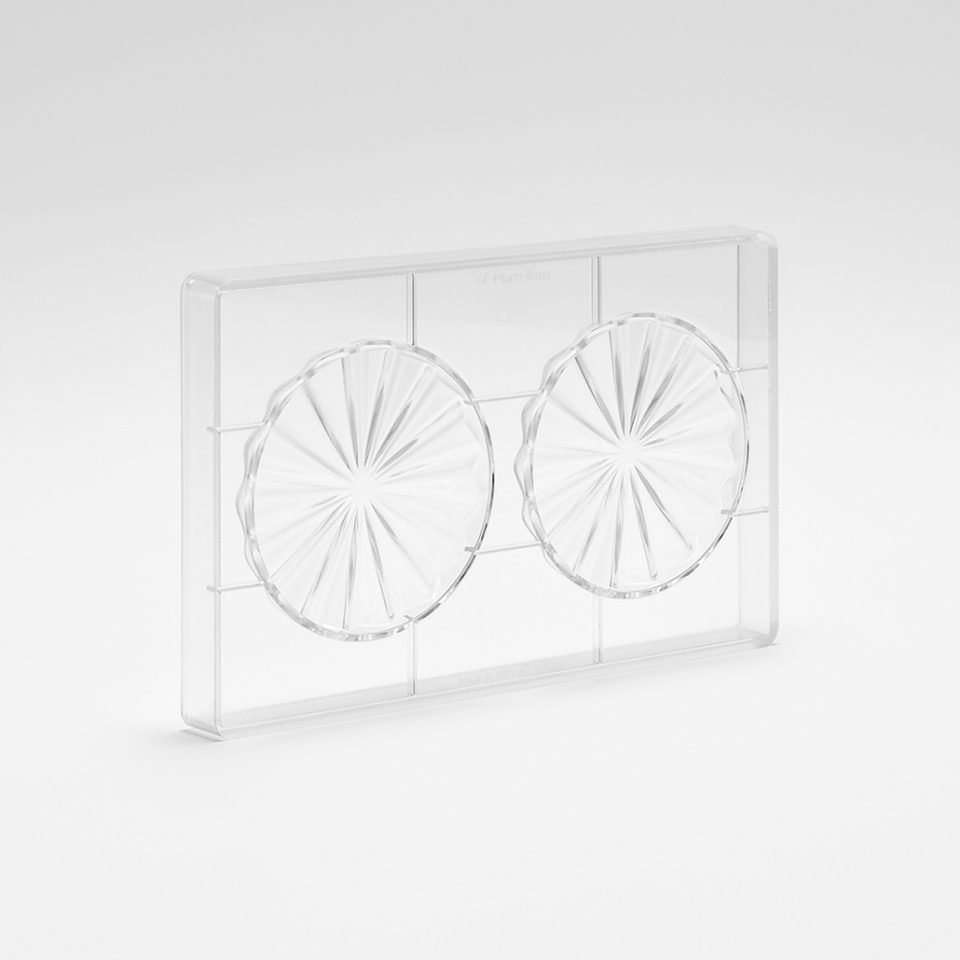

Plissé
Code: 21MA2031
21,35 €
VAT included
Professional chocolate molds aren't just distinguished by their final shape. They vary in structure, closure system, and usage depending on the type of production. Classic molds are designed for pralines, snacks, and bars; 3D designs require two halves to be joined with hooks or magnets. For more automated production, there are also versions dedicated to rotary machines, designed to ensure uniform chocolate distribution and increased productivity. Understanding these differences helps you choose the most suitable mold for your laboratory.
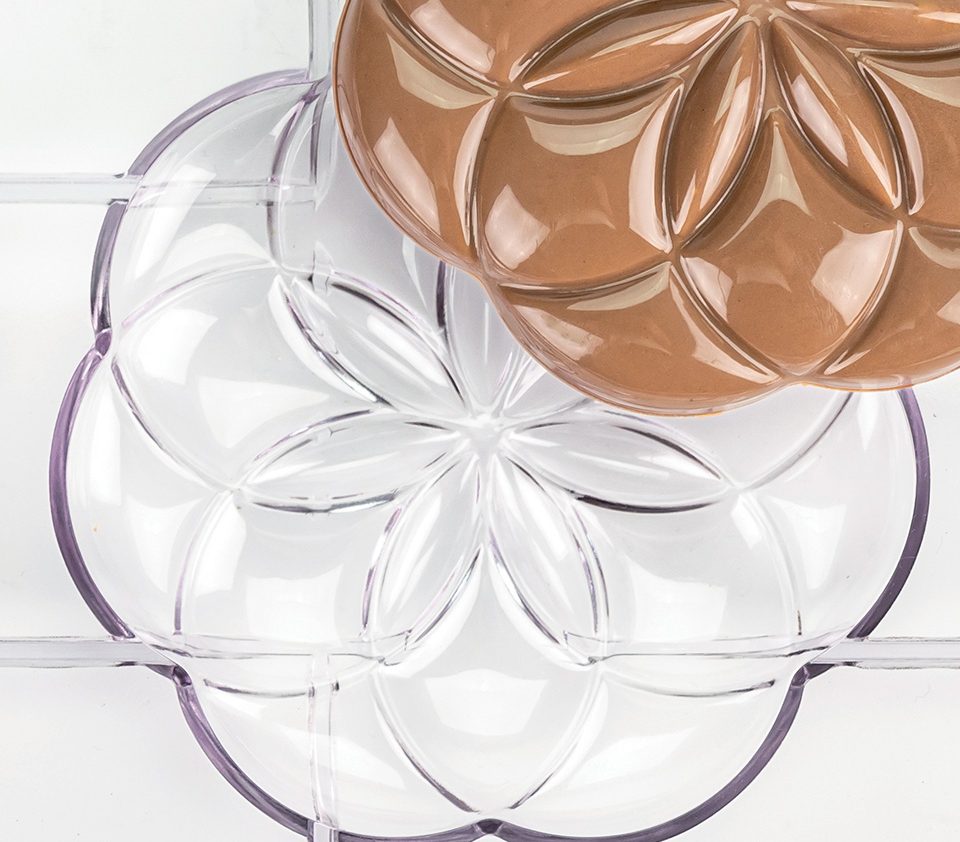
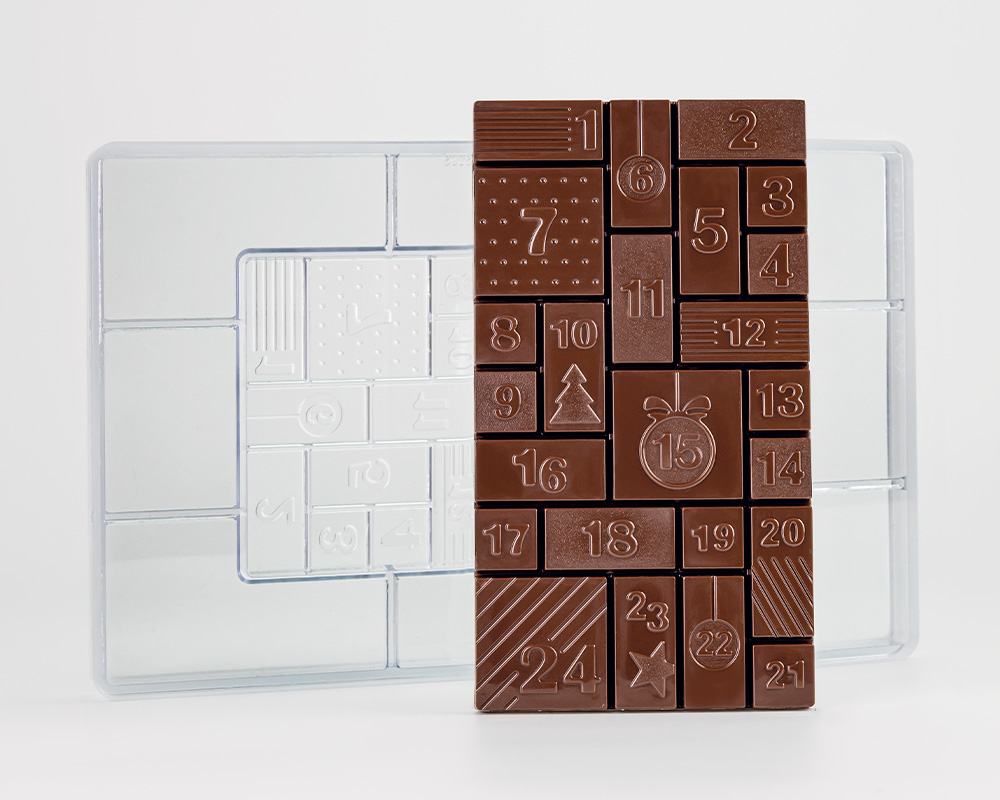
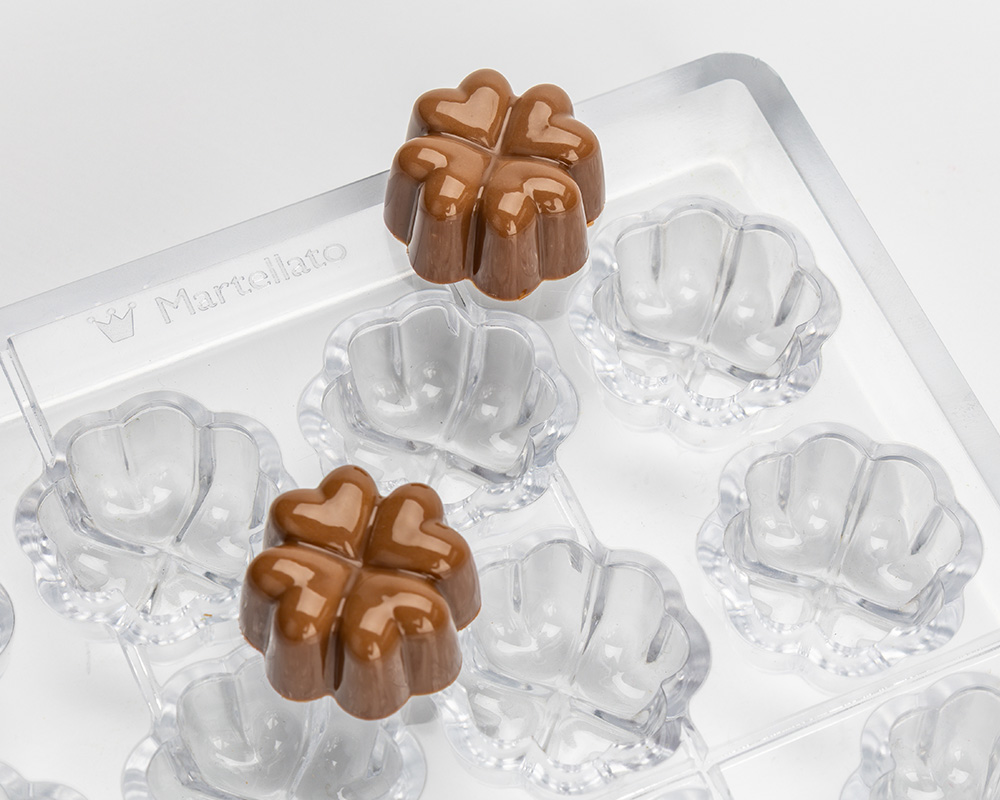
Praline and chocolate bar molds are the most straightforward choice for everyday production. The transparency of the material allows you to monitor the chocolate during crystallization, while the surface quality promotes a brilliant finish and precise detail definition. The shapes, depths, and arrangement of the cavities are designed to facilitate filling, vibration, emptying, and demoulding, offering consistent results even with repeated production runs.
In 3D molds with clasps, the two halves of the figure are held together by side closures. This solution, designed for artisanal production, is easy to open and close during the various stages of production. Once the chocolate is inserted, the mold can be moved to distribute it along the inside walls and obtain a uniform shell. The clasps ensure stability during processing and allow the figure to be easily removed from the mold by separating the two halves.
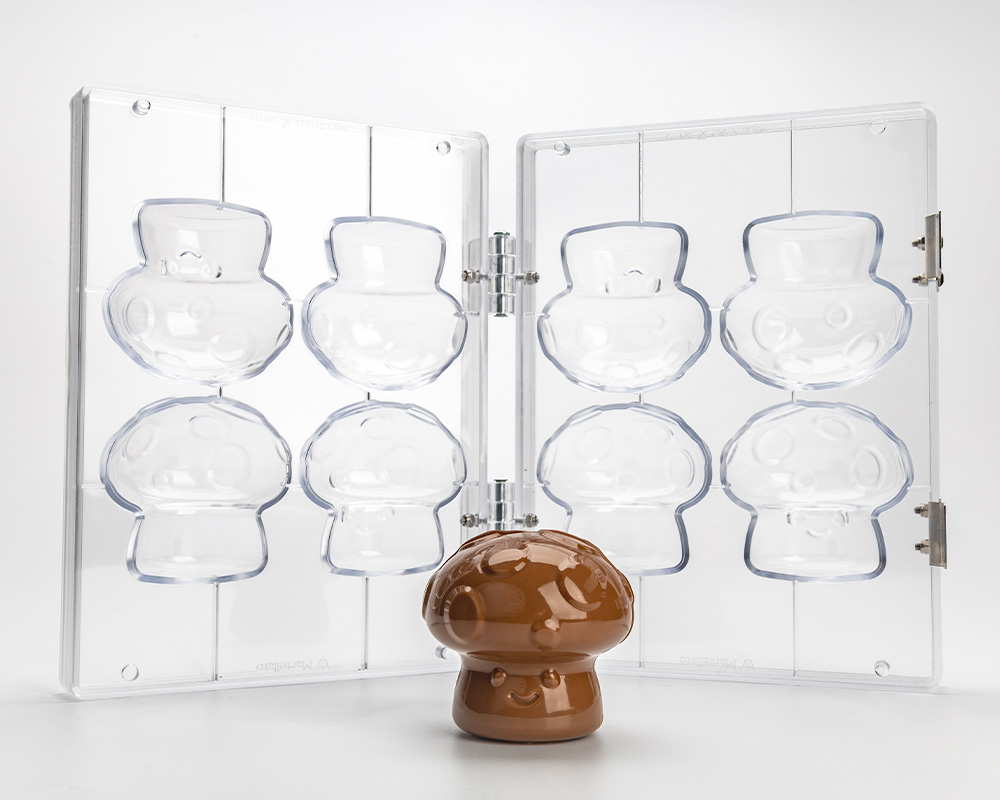
3D molds with magnets use a magnetic closure to keep the two halves perfectly joined during the pouring and distribution of the chocolate. This system makes opening and closing quick and helps achieve precise alignment of the object, particularly important for three-dimensional shapes. They are ideal for artisanal productions requiring a stable, clean, and immediate closure, without sacrificing ease of demoulding.
Molds for rotary machines are designed to automate the distribution of chocolate inside hollow objects. Depending on the model, the two halves can be joined with hooks or magnets; the version designed for rotary machines adds a metal plate or bar that allows for attachment to the machine. Continuous rotation distributes the chocolate evenly along the internal walls, promoting more uniform thicknesses and greater production efficiency, especially during repeated operations.
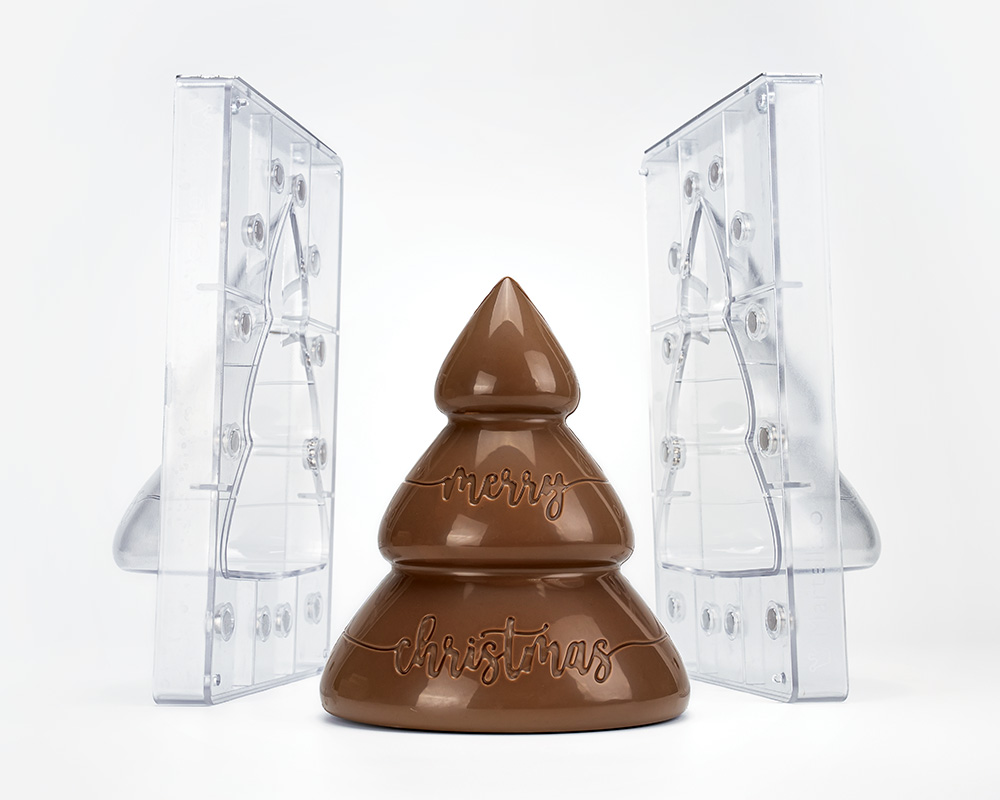
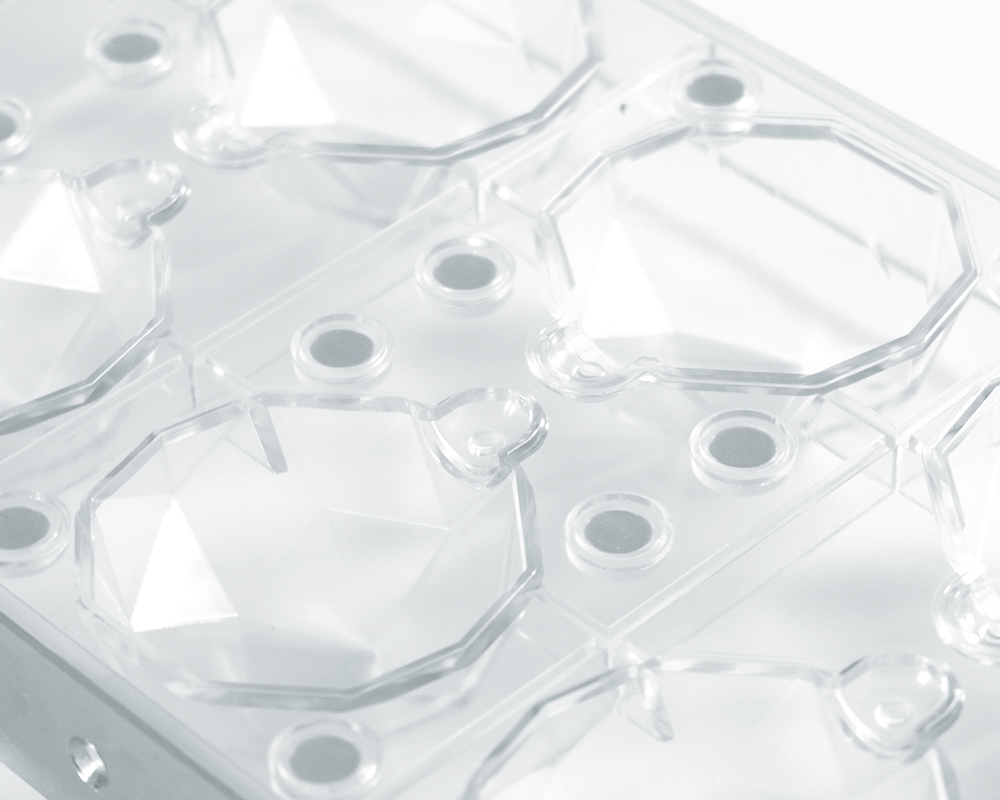
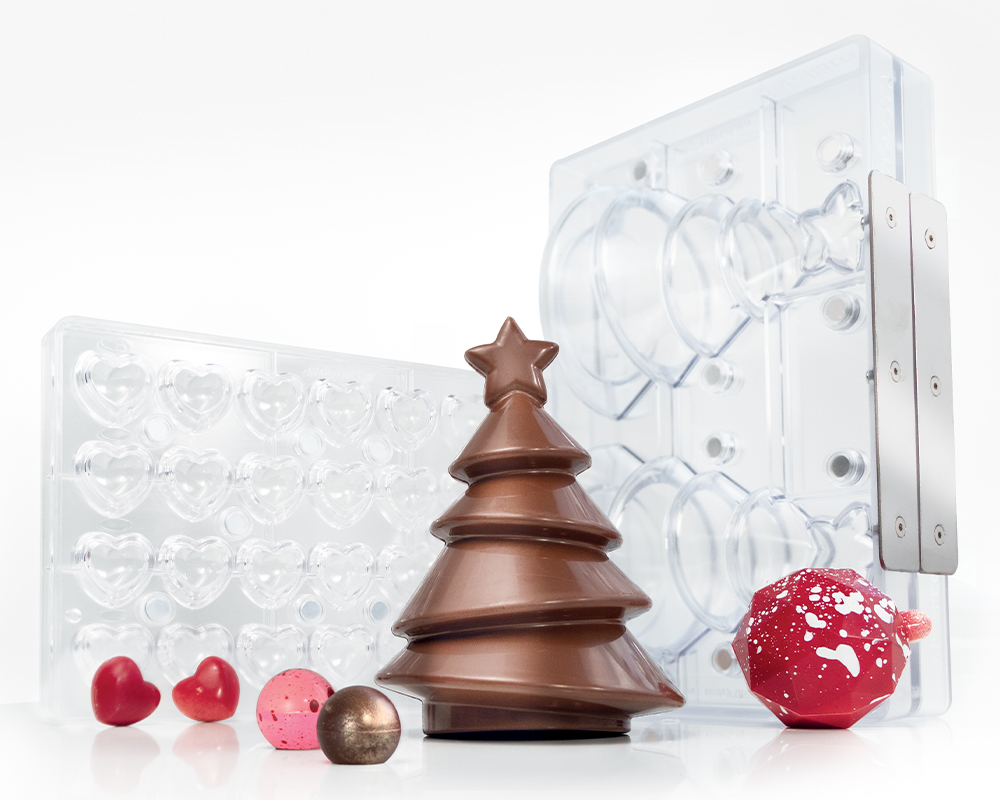
For the manual production of 3D objects, hooks and magnets offer two different locking systems, both designed to keep the two halves together during processing. If the workshop uses a rotary machine, it’s necessary to choose the version equipped with a metal plate or bar. For pralines, snacks, and bars, traditional molds remain the most practical solution. The starting point is therefore always the same: understand what you want to produce, the process, and the productivity level.
The quality of the result also depends on the care taken with the mold. To preserve its surface, it’s recommended to remove residue with soft cloths or sponges, avoiding abrasive materials. Washing should be done with gentle detergents and water at a temperature no higher than 50–55°C; when possible, low-calcium or demineralized water helps keep the surface cleaner. Proper maintenance promotes precise unmolding and helps preserve the chocolate’s brilliance over time.